
Hello everyone,
I hope you’re enjoying your day off. Here’s everything that’s due for next week’s class:
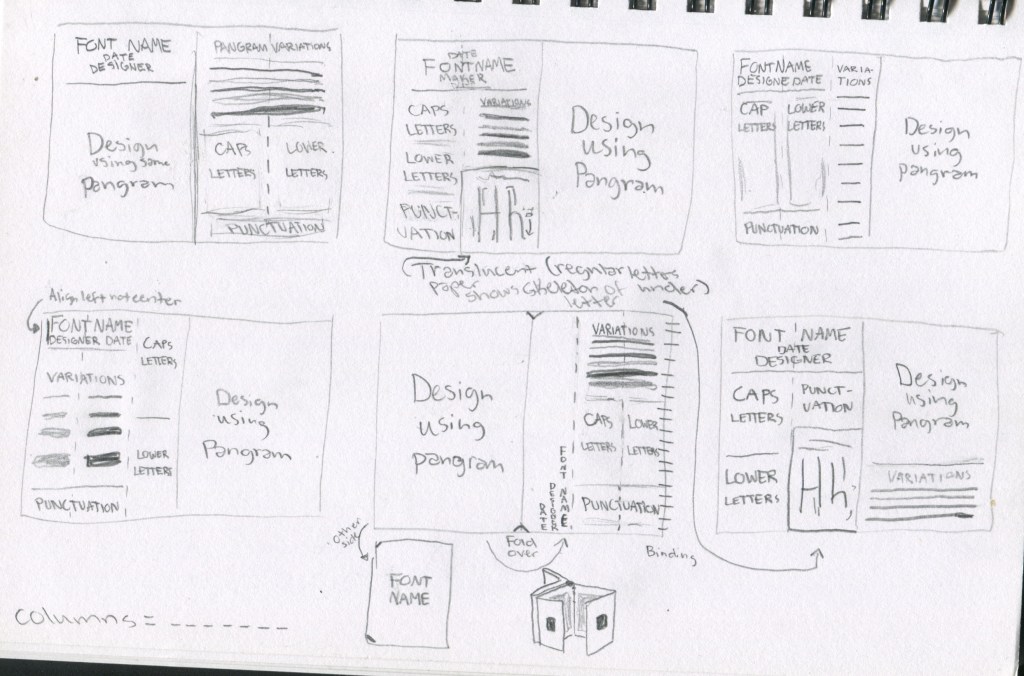
- Complete your cover and three font spreads of your font specimen book. If you are also planning on creating a table of contents or have a few pages between your cover and first font spread, have those in a good place next week as well. Before you move into building out all three spreads, it would be a good idea to post one spread of a font (or page depending on your format) to the blog for feedback before moving into all three of your spreads. That way when you make adjustments, you’ll only have to make changes to that one page/spread instead of all three.
- For critique, we will go computer-to-computer so I recommend printing your pages to take notes for any edits.
- If you have a poster or previous project in the flat-file drawer, please clear it out and bring it back to your dorm. People will start printing their books soon and will need a lot of space.
- I left some font books and my own inspiration/examples in the flat-file for you to reference while building out your books. Please return the books when you’re done looking at them for other students.
- For those of you printing a custom-sized book, trimming your pages by hand, and want to have text or images printed right to the edge you’ll want to set up your InDesign document’s “bleed settings”. Bleed is a printing term that is used to describe a document with images or elements that touch the edge of the page, extending beyond the trim edge and leaving no white margin. When a document has bleed, it must be printed on a larger sheet of paper and then trimmed down. Follow this link’s instructions to set that up. It’s very easy to do!
Here are a few readings/talks I’d like to you also watch/read before class next week:
Emigre Type Foundry Pretty Much Designed the ‘90s—Here’s What it Looked Like – A little history behind the Type Specimens we’ve been looking at in class, and how Emigre has impacted design.
Google Wants to Make Web Fonts Accessible All Over The World – Discusses the Open Font License.
What These 4 Key Type Design Trends Mean for the Future of Fonts
This little quiz is just for fun: Which Typeface Are You, Really?
I plan on grading your paragraph assignments throughout the week and will be reaching out to each of you individually to let you know what your midterm grade is. Reach out with any questions!




 COMD250 Fall 2019


You must be logged in to post a comment.